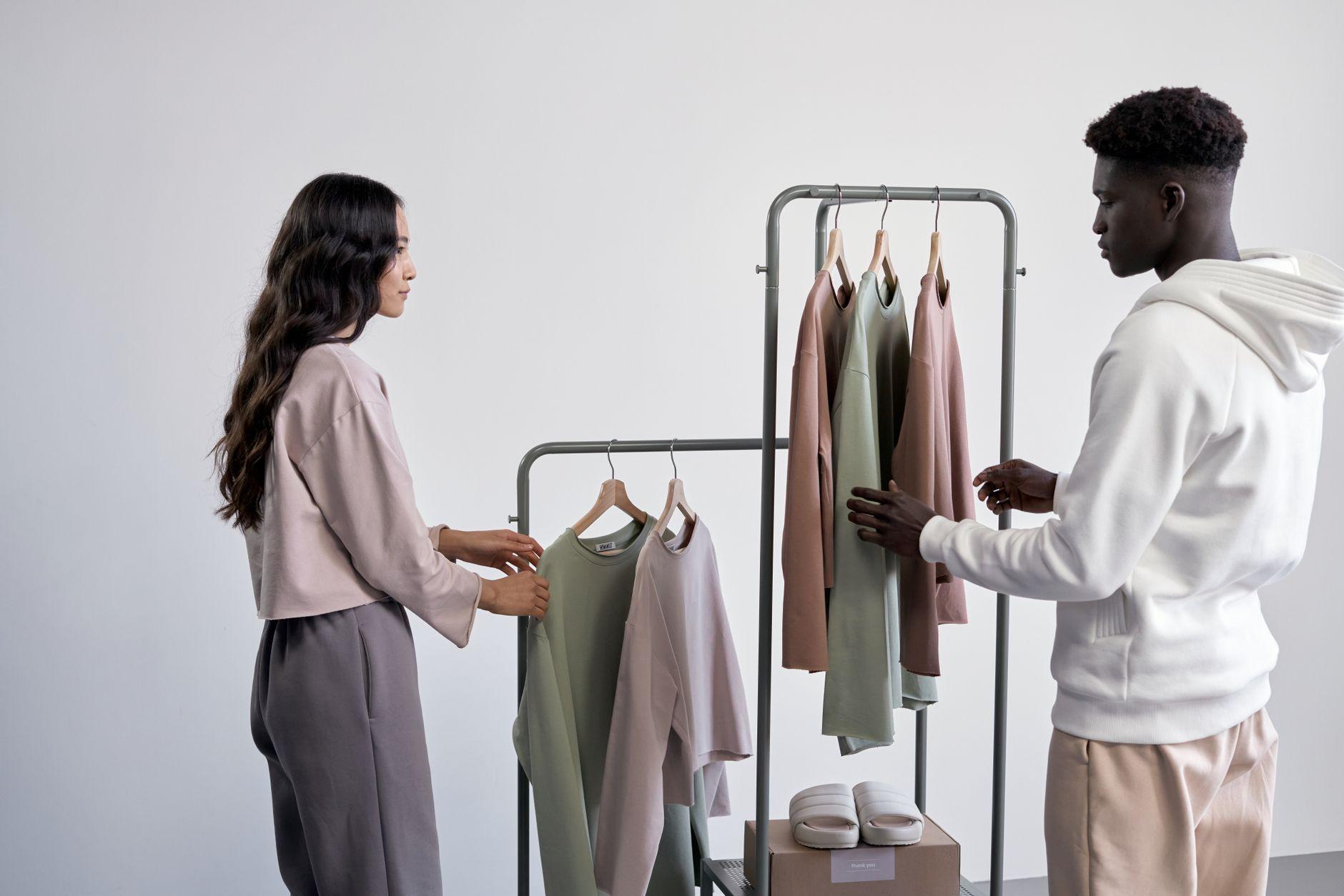
Unpacking the Power of Having Next to Nothing in Your Closet
It’s not about deprivation; it’s about intentionality. You see those folks who always look put-together, effortlessly stylish, without a mountain of clothes? They’ve probably cracked the code to a truly minimalist wardrobe, and it’s not about suffering. It’s about a quiet confidence that comes from knowing exactly what works for you and letting go of the rest. Think of it as curating your personal uniform, rather than just accumulating stuff.
I used to be the opposite, drowning in clothes I rarely wore. My closet was a testament to impulse buys and “what if” scenarios, costing me easily a few thousand dollars over the years on garments that ended up shoved in the back. There was a specific moment, staring at a chaotic pile of dresses I’d bought on sale but never put on, when I realized this whole “shopping” thing was making me miserable, not happy. That’s when the idea of a minimalist wardrobe really started to click.
The core principle is simplicity, and it manifests in a few key ways. First, you focus on versatile pieces. Instead of ten t-shirts in every color imaginable, you might have three or four high-quality ones in neutral shades like white, black, and grey. These can be dressed up or down, paired with almost anything else you own. This drastically cuts down on decision fatigue when you’re getting ready. You’re not wondering, “Does this go with that?” because, frankly, most things are designed to go with each other.
Another crucial element is quality over quantity. It’s way better to have a few well-made items that last for years than a closet full of fast fashion that falls apart after a few washes. For example, a good quality cashmere sweater, even if it sets you back a few hundred dollars, will serve you better and longer than three cheap acrylic ones. You end up saving money in the long run. Consider the cost-per-wear; a $200 sweater worn 100 times is cheaper than a $20 sweater worn twice. Research from sources like NerdWallet shows the average American spends a significant amount on clothing annually, and much of that could be redirected.
Now, here’s the real kicker, and it’s something I struggled with initially: letting go of sentimentality and the “just in case” mentality. My fear was that if I got rid of that slightly-too-tight pair of jeans from college, I’d somehow regret it later. Guess what? I never did. The minimalist wardrobe thrives on intentionality. You keep what you love, what fits you now, and what serves a purpose in your current life. If something doesn’t fit that criteria, it’s got to go. This isn’t about wearing a uniform for the rest of your life, but rather about a curated selection.
Of course, it’s not all sunshine and perfectly organized hangers. The biggest hurdle for many, myself included, is the initial decluttering process. It can be emotionally draining to confront all the choices you’ve made, the money you’ve spent, and the items you’ve held onto for no good reason. It can take weeks, even months, to pare down your belongings to a manageable number. Furthermore, the social pressure to keep up with trends can be a real drag. You might feel a pang of envy seeing someone with a closet full of the latest styles, but that’s where the quiet confidence really kicks in.
Think about iconic figures who embody this. Someone like Steve Jobs famously wore the same black turtleneck, jeans, and sneakers almost every day. He wasn’t bored; he was focused. His energy was directed towards his work, not his outfit. This isn’t to say you have to wear the exact same thing every day, but the principle holds: reducing daily decisions frees up mental bandwidth for more important things. It’s about owning your choices and feeling comfortable in your skin, not just your clothes.
The real beauty of a minimalist wardrobe is the mental space it creates. When you’re not overwhelmed by choices or stressed about what to wear, you gain clarity. You can focus on your personal style and what genuinely makes you feel good. It’s about building a wardrobe that supports your life, rather than dictating it. My personal experience has shown that owning fewer, better things leads to a more peaceful existence.
But let’s be honest, sometimes you just want to wear that sequined unicorn onesie you bought on a whim. And that’s okay. A minimalist wardrobe doesn’t mean a life devoid of fun or spontaneity; it just means the fun and spontaneity aren’t dictated by an overflowing closet. The true minimalism is found not in the number of garments, but in the lack of obsession over them.
