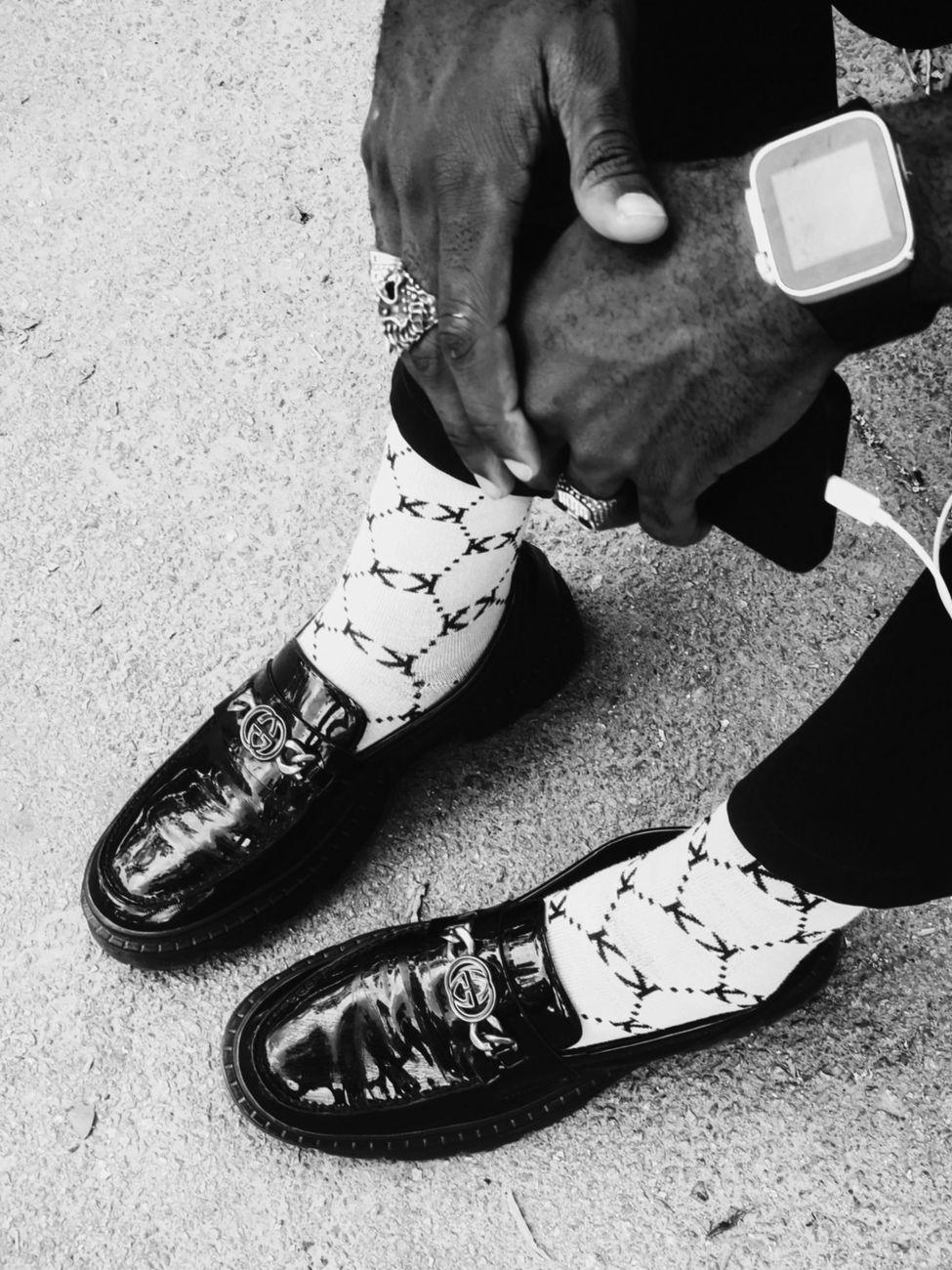
The Unspoken Language of Your Ankles and Waistline: Why Sock and Belt Harmony Still Commands Respect
I used to think it was all about the suit. Seriously. Back in the day, I’d spend ages agonizing over the tie, the shirt, even the cufflinks. The socks and belt? Those were afterthoughts, grabbed from whatever drawer was closest. Then one day, a mentor, a guy who always looked impossibly put-together, pulled me aside and pointed out my mismatched belt and socks with a look that wasn’t quite anger, but definitely disappointment. It hit me like a ton of bricks. He explained that for a sharp eye, those little details aren’t just details; they’re the punctuation marks on your entire outfit. It’s a subtle signal that you’ve thought things through, from the big picture down to the nitty-gritty.
This isn’t just for fancy boardrooms anymore, either. Even in more casual settings, the right sock and belt coordination can elevate your look from sloppy to sophisticated. Think about it: you’re wearing a killer pair of jeans and a well-fitting shirt. If you slap on a scuffed, brown belt with some bright, argyle socks, it just… clashes. It pulls the whole thing down. But swap that for a black belt and black socks that match your shoes, or a deep burgundy belt with coordinating burgundy socks, and suddenly, the whole ensemble feels intentional and polished. It shows you’re not just throwing on clothes; you’re curating an image.
The biggest hurdle, I’ve found, is the sheer convenience of ignoring it. It’s just easier to grab whatever belt and socks are on top. And honestly, most people won’t even notice if your socks are a slightly different shade of navy than your belt. That’s the rub, isn’t it? The impact is mostly subconscious. You’re not getting a gold star for perfectly matched socks and belt, but you might get a subtle nod of approval, or at least avoid a subconscious ding in someone’s perception of your attention to detail. It’s like having a perfectly balanced meal versus one that’s just… okay. You can’t always pinpoint why, but one just feels better.
So, how do you actually do it without driving yourself crazy? The easiest way is to start with the classics. If you wear black shoes, a black belt is your go-to. It’s a no-brainer and always looks sharp. For brown shoes, a brown belt is your best friend. Match the shade as closely as you can. For more adventurous footwear, like burgundy or oxblood shoes, find a belt in a similar hue. It’s about creating a visual line that flows smoothly from your trousers down to your shoes. For those of you who are feeling bold, matching your socks to your belt (and therefore, your shoes) is the ultimate move. This creates a continuous color block that can actually make your legs look longer.
Now, here’s where it gets tricky, and frankly, a little annoying. What about those days you want to wear brown shoes with black pants? Or grey pants with blue shoes? This is where many guys throw their hands up. My personal take? If you’re going for a truly sharp look, try to keep your belt and socks in a neutral territory that bridges the gap. A dark grey belt and dark grey socks can work with both black and brown shoes in a pinch, for example. But sometimes, you just have to accept a slight disconnect. It’s a limitation of the system, and that’s okay. Nobody’s perfect, and sometimes the outfit is more important than the minute details of belt and sock harmony.
Here’s a real-world example that still baffles me: I saw a guy at a wedding wearing a fantastic navy suit, crisp white shirt, and stunning cognac loafers. His belt was a perfectly matched cognac leather, which was great. But then he wore bright white athletic socks. It completely ruined the illusion of polish. It was like he’d spent thousands on the suit and shoes, then grabbed the first thing he found for his feet. It’s moments like those that make me question if people truly understand the power of these small details. A pair of navy or even a subtle patterned sock would have made him look like a million bucks. Instead, he looked like he got dressed in the dark.
Color is obviously key, but texture plays a role too. A braided leather belt might look odd with super-fine, ribbed dress socks. Generally, stick to smooth leather belts with dress socks and maybe a more casual canvas or braided belt with chunkier chinos and chukka boots, paired with thicker wool or cotton socks. It’s about maintaining a consistent level of formality. Think of it like speaking; you wouldn’t use slang in a formal speech, and you shouldn’t pair a rugged canvas belt with paper-thin silk socks at a black-tie event. For a deeper dive into understanding color theory in fashion, resources like Investopedia’s guide to color psychology can offer interesting parallels to how we perceive combinations.
The downside, and it’s a big one for some, is the sheer cost and clutter. You end up needing multiple belts in different colors and materials, plus a veritable rainbow of socks. Suddenly, your sock drawer looks like a Jackson Pollock painting, and your belt collection rivals a cobbler’s inventory. It’s an investment, both in money and in mental bandwidth. And let’s be honest, it’s still a relatively niche concern. You can be impeccably dressed from head to toe and have the most perfectly matched belt and socks, only to have someone compliment your watch. The universe, it seems, has a sense of humor. You can learn more about building a versatile wardrobe on Forbes’s style advice.
Even with all the talk of casualization and breaking rules, the belt and sock combo remains a quiet indicator of confidence and self-awareness. It’s a foundational element that, when done right, simply works. If you’re aiming for that effortless polish that makes people subtly take notice, neglecting this seemingly minor detail is a mistake you might not even realize you’re making. Honestly, if you can master the belt and sock coordination, you’ve probably already figured out most of dressing well, and the rest is just window dressing.
